Your First Day at a Test: Follow the Session, Not Every Ball
Follow a first day of Test cricket by using session breaks as landmarks, so you can enjoy the changing contest without tracking every delivery.
A first day of Test cricket becomes easier to follow when you treat each session as a small story, not a tally you must keep. Use the scheduled intervals to pause, then choose one passage of play to watch with care.
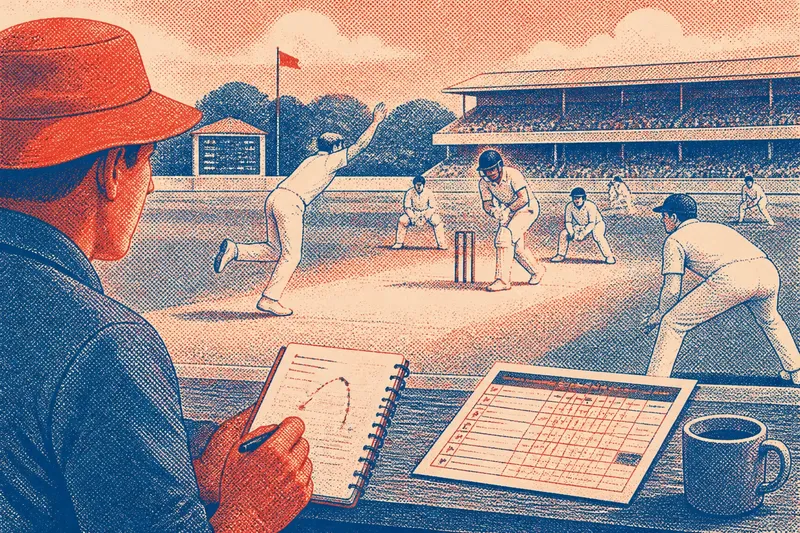
Say you are at a ground with a scorecard in hand. You know the teams, but the fielders’ positions and each change in the action come quickly. Rather than trying to record everything, you decide to notice how one batter responds to the bowlers’ changing demands. That gives the day a thread without turning it into homework.
Set a simple frame
Before play, check the day’s schedule and note when the first interval is expected. Test days are generally arranged in three sessions separated by breaks, though playing time can be adjusted. The interval is a useful boundary for your attention, not a forecast of what the score will be.
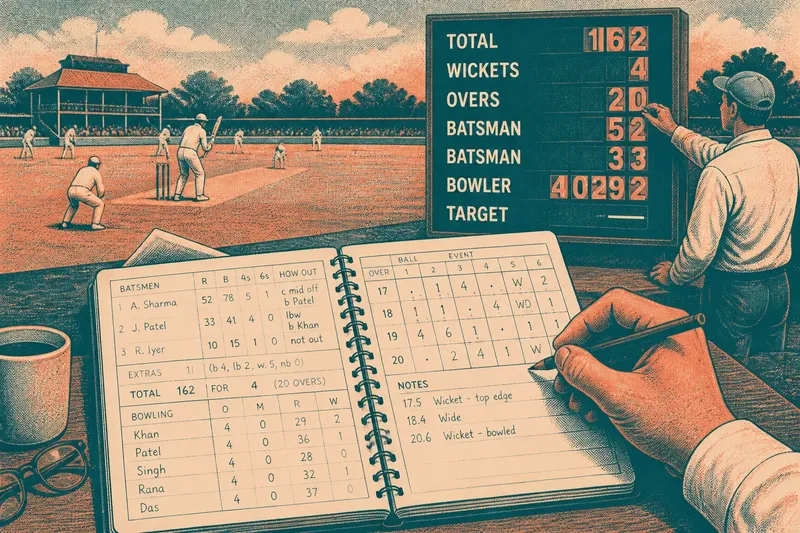
Look at the scorecard for the opening batters and the bowler expected to start. Remembering a few names helps you connect the action to people: who is trying to settle, who is seeking a breakthrough, and who may be waiting to bat. The card is a reference, not a reading assignment.
Choose one question for the opening session: how are the batters dealing with deliveries outside the off stump? A leave, a defensive shot, and a drive can each tell you something about their judgment. You do not need to predict the outcome; simply watch how the answer changes.
Watch a passage closely
Early in the session, the bowler may repeatedly land the ball in a similar area while the batters defend or let it pass. The score may move slowly. Instead of treating that as a lack of action, notice the exchange: the bowler is asking for a mistake, and the batters are deciding which deliveries deserve a response.
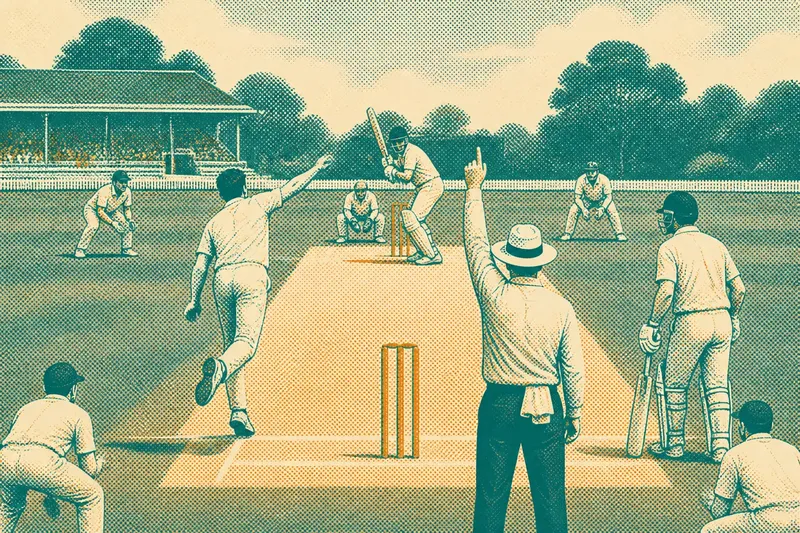
Pick a passage that offers a clear point of attention: a new batter’s first few balls, a change in bowling length, or a delivery that makes the batter move their feet. Watch the bowler’s run-up and release, then the batter’s movement and the fielders’ reaction. You can return to the wider action afterward.
Imagine an invented opening passage in which a batter repeatedly steps forward to defend. The bowler then pitches one ball shorter, meaning it lands nearer the batter than the previous fuller deliveries. The batter stays back and defends it; no wicket follows, but you can see the bowler has changed the challenge and the batter has adjusted.
A scorecard can help you keep track of who is batting and which bowler is in operation. Use it to locate names and moments, then look back at the play itself for the shape of an exchange. It is like a bookmark: useful for finding your place, but not a substitute for reading the page.
Use the interval well
At the break, pause rather than trying to reconstruct every delivery. In the invented day, both opening batters remain in, and one has been more willing to leave balls outside off stump. You jot down that observation. It is enough to carry a question into the next session: will the bowler keep testing that judgment, or try something else?
Use the interval to separate what you saw from what you infer. “The batter left several balls” is an observation; “the bowler is setting a trap” is a possible interpretation. Keeping the two distinct makes your notes clearer and leaves room for a different explanation as play continues.
A short note can be as plain as “batter leaves outside off; bowler tries fuller length.” If you are watching with someone, ask what caught their attention. They may have followed a particular batter’s footwork while you watched the bowler’s approach.
Follow a changing role
When a new bowler comes on, pay attention to the first few deliveries of the spell. The bowler may use a different angle, pace, or length, and the batter must respond to that particular challenge. You do not need to infer a captain’s full plan from a field change; notice what changed and what the batter did next.
Imagine that, later in the same invented day, a bowler delivers a fuller ball outside off stump. It moves away from the batter after pitching, and the batter reaches for it, edging it to a slip fielder. This sequence makes the dismissal understandable without implying that the earlier shorter ball caused it: the fuller delivery, its movement, and the batter’s shot are the immediate events to watch.
After the wicket, notice how the incoming batter approaches the first deliveries. Do they defend, leave, or look to score? The answer gives you a fresh point of attention. Avoid treating one wicket as a promise of collapse or recovery; the next passage may take the contest in either direction.
Questions during play?
What is a session in Test cricket?
A session is a scheduled period of play within a day, with intervals separating the day’s periods. Its start and finish give you convenient moments to reset your attention.
Do I need to watch every ball?
No. Choose a passage to follow closely when a new batter arrives or the bowling changes. You can use the scorecard to find your place when you look away.
What should I notice after a wicket?
Watch the incoming batter’s first responses and whether the bowling changes. Those details give you a new question to follow without requiring a prediction about the rest of the day.
Why can a quiet session matter?
A quiet passage can show a batter judging which balls to play and which to leave. It can also reveal whether the bowler keeps the same approach or changes it.
Close the day
As play approaches its scheduled close, keep your attention on the question you chose, but allow it to change. In the invented day, the opening pair’s patient choices give way to a more attacking spell from one batter. You note the change without deciding whether it was wise; the observation is useful on its own.
At the end of play, compare your notes with the scorecard. The card helps you identify who remains at the crease and which passages shaped the day; your notes preserve the details you chose to follow. Together they make the session easier to recall without requiring a ball-by-ball account.
For a first day of Test cricket, a few specific observations are more useful than trying to retain every delivery. Keep a brief note of what changed, and leave a question for the next session. You will have a clear place to resume when play starts again.