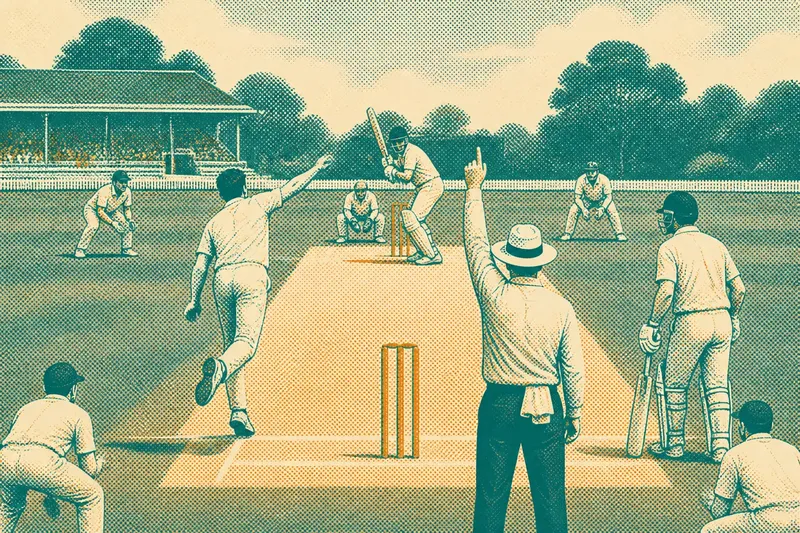
Why Cricket Fielding Positions Move With the Match
Cricket fielding positions shift with the batter, bowler, and match situation. Learn how to read those changes and spot the trade-offs behind a captain’s plan.
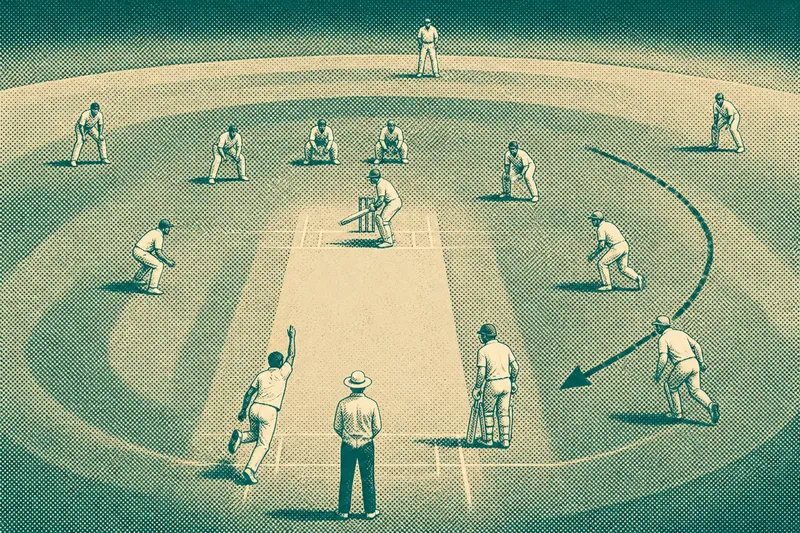
Cricket fielding positions shift to answer a particular batting threat, not to fill permanent slots on a diagram. Watch a fielder move from the boundary toward the pitch as the bowler changes, and you can often see the plan adjust before the next delivery.
Names such as slip, cover, and fine leg mark recognizable areas, but they do not bind a fielder to one spot for an innings. The captain can reshape the field between deliveries, subject to the applicable playing conditions, and the arrangement may change with the striker, bowler, or match situation.
Cricket fielding positions
Fielding positions are named regions, not assigned seats that remain occupied throughout a match. A fielder’s location can shift in response to the likely direction of a shot, the bowling plan, the batter’s habits, or the need to protect a particular area.
Think of a field diagram as a map rather than a roster. A map labels places; it does not insist that a traveler stay in one place. Likewise, “point” tells you where a fielder is positioned relative to the batter and pitch, but the captain can move that fielder closer, deeper, or elsewhere as the plan develops.
Rules can restrict where fielders stand, and the permitted arrangement depends on the format and competition conditions. For a specific match, the applicable playing conditions and officials’ instructions determine what is allowed. Within those boundaries, captains can adapt the field.
Captain’s fielding choices
Captains move fielders to make a chosen kind of scoring harder, create a chance of a dismissal, or respond to a change in the match. Those aims can pull in different directions. A fielder near the bat may offer a catching chance but leave space elsewhere; a deep boundary rider may cover a powerful shot while allowing a batter to take a single.
The bowler’s method matters. A bowler trying to make the batter play at deliveries outside off stump may use slips and a gully, where an edge could carry. A bowler attacking the stumps might instead protect straight boundaries or place a close fielder where a defensive push could offer a catch. The position makes sense in relation to the delivery being attempted.
The batter matters too. A player who favors a cut shot may draw attention to point and cover. Someone who often sweeps may prompt a fielder to move finer on the leg side. These adjustments do not predict the next shot; they shape the available choices and prepare for a possible response.
Match circumstances can also change the value of each option. If the batting side needs to score quickly, a captain may protect boundary areas that seem likely targets. If the priority is to build pressure or seek a wicket, the captain may bring fielders in and accept more risk near the edge of the field.
Reasons for a shift
A change usually follows a signal the captain considers relevant, though a spectator may not know the reasoning. The captain might respond to a new batter, a change of bowler, a pattern in the striker’s shots, a different line of attack, or the demands of the score.
Say a left-handed batter has just arrived, and the captain expects the bowler to target the off stump. The captain moves a close catcher to the side where an outside edge could travel and shifts a boundary fielder to cover a likely scoring shot. If the batter then begins stepping across to sweep, the captain may move a leg-side fielder finer. The visible result is a field that responds to the developing threat rather than preserving the previous batter’s arrangement.
Position names can also be adjusted within the same broad area. A fielder at deep square leg might move squarer or finer; one at cover might be brought closer to the pitch or sent back toward the boundary. These shifts can change the likely result of a shot without changing the general label a commentator uses.
Common positions and purposes
Position names help you read the arrangement, but their purpose depends on the plan. Common locations can suggest where the captain expects contact or wants to deny easy scoring.
- Slips and gully: Close catching positions on the off side, often used when an edge is a plausible result.
- Point and cover: Off-side positions that can limit cuts, drives, and pushes through that region. They may be closer to save singles or deeper to cover stronger shots.
- Mid-off and mid-on: Fielders in front of the batter on the off and leg sides. Their depth can leave room for a single or help protect a boundary.
- Square leg and fine leg: Leg-side positions whose angle matters against shots played across the line or fine behind the batter.
- Long-off, long-on, and deep square leg: Boundary positions used to cover powerful hits into particular areas, though a captain may move them as the expected shot changes.
These descriptions are starting points, not fixed duties. A named position can sit at a different depth, and a captain may leave a region open deliberately to encourage a shot toward a waiting fielder or accept a single rather than risk a boundary elsewhere.
Reading field changes
Compare the field before and after a move, then connect the change to the next delivery. Looking at one fielder in isolation can mislead: the captain may move one player while another fills the space, preserving coverage while redirecting the trap.
Use these observations to make a grounded reading of the field:
- Check which fielders are close to the bat and which are near the boundary. If close catchers gather, consider whether the bowler may be inviting a defensive stroke; if boundary riders dominate, watch for protection against a stronger shot.
- Notice whether a new batter or bowler has just arrived. If the field changes at that point, compare it with the previous arrangement; if it does not, look for another clue rather than assuming the plan is unchanged.
- Watch the bowler’s line and length. If the field appears set for an edge outside off stump, see whether the delivery targets that area; if not, consider what other threat the positions may address.
- After the ball, note the batter’s shot and whether the captain responds. If the same scoring area is used again, watch for a fielder moving toward it; if the captain holds the field, consider whether another option is being prioritized.
- Check whether a fielder moves again before the next delivery. If the shape changes, read it as a possible adjustment; if it stays put, compare the bowler’s approach and batter’s options before drawing a conclusion.
These are ways to form a reasonable reading, not claims of certainty about a captain’s intention. A fielder may move for several reasons, and the next ball may be delivered differently from what the arrangement seemed to suggest. The useful habit is to notice the relationship between the field, the bowling choice, and the batter’s options.
Fielding position questions?
Can a captain change the field before every ball?
A captain can adjust the field between deliveries, subject to the playing conditions and the match’s applicable restrictions. The movement may involve one fielder or a broader reshaping of the field.
Does a fielder always stay in the named position?
No. A fielder described as being at cover can stand closer or deeper, or move to another region. Commentary names provide orientation, while actual placement is a tactical choice.
Why leave an area apparently unprotected?
A captain may judge that guarding another area matters more, or may be willing to concede a lower-risk single. An open space can also tempt a batter toward a shot the bowler and field are prepared to challenge.
Can the batter influence the field?
Yes. Stance, preferred shots, and choices during an innings can prompt a captain to shift fielders, change the bowler’s target, or do both, though the batter still decides how to play each ball.
Watching the whole field
Changing cricket fielding positions makes the field part of the contest rather than background scenery. A close fielder can signal an attack on the edge; a boundary rider can show concern about a powerful shot; an open space can reveal what the captain is prepared to concede. None of these clues settles what comes next, but together they make the tactics easier to follow.
Next time a fielder moves, look at the whole arrangement rather than memorizing a new position name. Ask which option the captain may be trying to discourage, which one remains available, and how the bowler might use that trade-off. That pause helps you read the next delivery as a response to the field already in place.