Why an Over Has Six Legal Deliveries
Why an over has six legal deliveries: learn how the count works, how wides and no-balls affect it, and how to follow an over as it unfolds.
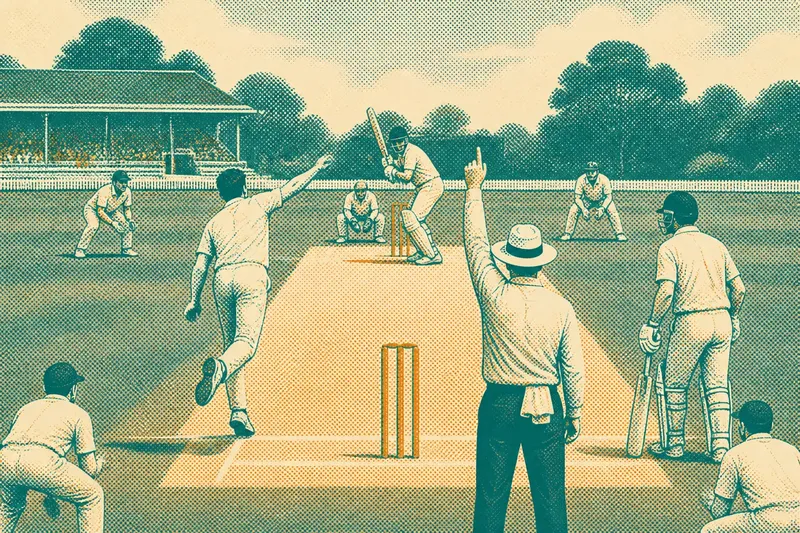
Why an over has six legal deliveries becomes clear when you watch the bowler’s end: the umpire counts valid attempts, and play changes ends when the count is complete. A wide or no-ball interrupts that count because it is not one of the six legal deliveries.
That rule gives an over a reliable rhythm. It sets a defined stretch of work for the fielding side and gives the batting side a recurring chance to assess a bowler. The six balls are not simply six events on the scoreboard; they are six valid deliveries that complete a unit.
The over as a unit
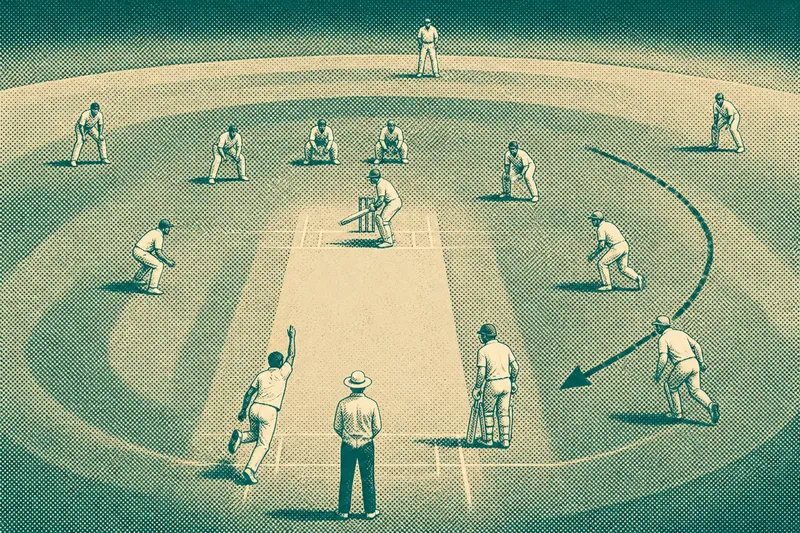
In ordinary play, one bowler delivers from one end until the over is complete. The next over comes from the opposite end, and another bowler takes over. The same bowler cannot bowl two consecutive overs, though that bowler may return later. This alternating pattern gives the match a steady structure without requiring play to stop after every ball.
Think of an over like a tray with six spaces. A legal delivery fills one space; an illegal delivery leaves the space empty, even if the ball produces runs or a dismissal. Once all six spaces are filled, the over is complete and the change of ends follows.
The umpire signals decisions, and the scorers record the deliveries and events. A ball that produces no run can still be legal and count. Conversely, a delivery that gives the batting side runs can be illegal and not count toward the six.
Why legality matters
Legality and outcome are separate questions. A delivery may be legal but produce a boundary, a run, or a wicket. An illegal delivery may also produce runs or, in particular circumstances, a dismissal. The over count depends on whether the delivery is legal, not on whether the batting side scored.
A no-ball is called for a breach of the delivery laws, such as an overstep at the crease. A wide is called when the ball is too far from the striker to be reasonably playable under the applicable conditions. Both calls bring a penalty, and both mean that the delivery does not count as one of the over’s six legal balls.
Dismissals are restricted on both kinds of illegal delivery. A no-ball rules out several common methods of dismissal, including being bowled, caught, or stumped, while a wide rules out most methods but can still allow a stumping or a run out. The rules and any competition playing conditions govern the precise result; the useful distinction for counting is that neither call advances the legal-ball count.
What happens after a call
When a wide or no-ball is called, play does not rewind. The batter may hit the ball, the batters may run, and the ball may reach the boundary. The umpire’s call and the resulting runs or dismissal are recorded, subject to the restrictions on dismissals from illegal deliveries. The bowler must then deliver again to complete the over’s legal-ball count.
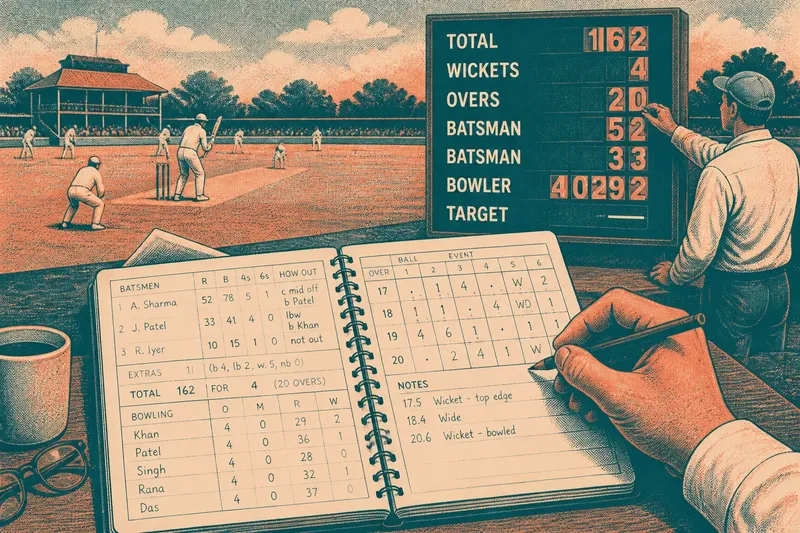
Say you are following an invented, hypothetical over. Its first attempted delivery is called wide, and the batters take a run before the ball is returned. The score records the wide penalty and the run made, but the legal-ball count remains at zero. The next legal delivery will be the first of the six.
If a later ball is legal, it counts even when the batters take no run. If another wide or no-ball follows, that too leaves the legal count unchanged. An over may therefore involve more than six attempts, while still requiring exactly six legal deliveries to finish.
Reading the count live
For a new viewer, the easiest way to follow the count is to treat the umpire’s call as the reference point for each delivery. Listen for “wide” or “no-ball,” and notice how the score changes. Then watch the next attempt: the bowler still owes the over a legal delivery.
- Legal ball, no run: If the umpire gives no illegal-delivery call and the score does not change, count one legal ball; if a no-ball or wide is called, leave the count unchanged and wait for the next delivery.
- Legal ball, runs scored: If the delivery is legal, count it and record the runs; if it is called wide or no-ball, record the applicable extras and do not advance the legal count.
- Wide: If the umpire signals wide, record the penalty and any other applicable runs or events, then keep the legal count unchanged; if the signal is unclear, follow the officials’ decision rather than guessing from the score.
- No-ball: If the umpire signals no-ball, record the penalty and any other applicable runs or events, then keep the legal count unchanged; if the signal is unclear, wait for the official score to be confirmed.
- Dismissal after a wide: If the batter is stumped or run out, check the official decision because those dismissals can be possible; if another method is claimed, do not assume it stands and follow the umpire’s ruling.
- Six legal balls reached: If the umpire and scorer confirm six legal deliveries, the over is complete and the next over comes from the other end; if the count is uncertain, use the official score rather than counting every attempt.
The scoreboard can help, but its display varies: some show the over number and balls completed, while others use a compact notation. If the notation seems confusing, listen to the umpire and compare it with the official score after the next legal delivery. A replay is not needed to understand the basic rhythm.
Why six legal deliveries
Six legal deliveries create a repeated unit long enough for a bowler to build a sequence, yet short enough to make a change of end and bowler frequent. Keeping illegal deliveries outside the count preserves that unit: a bowler cannot complete the over by making an invalid delivery, and the batting side still receives six valid chances to face the ball.
The distinction also keeps the record intelligible. If an illegal ball counted as one of the six, the over’s length would depend on how often the bowler breached a rule. Counting only legal deliveries gives “over” a consistent meaning, even when the number of attempts varies.
Questions about over counts?
Does a dot ball count toward the over?
Yes, if the umpire does not call it a no-ball or wide and no other ruling makes it illegal. “Dot ball” describes the lack of runs scored from the delivery, not whether it counts toward the over.
Does a boundary count toward the six?
If the delivery is legal, it counts as one of the six even when it reaches the boundary. If it is called wide or no-ball, the legal count does not advance, though the score may include a boundary or other runs.
Can an over contain more than six deliveries?
Yes. Any wide or no-ball requires another delivery because it does not count as a legal ball, so repeated calls can extend the over. The completed over still contains six legal deliveries.
Who keeps the official count?
The scorers record the balls and runs, while the umpires administer play and signal decisions. If a live display appears to conflict with an official call, the officials’ decisions and the official score govern rather than a viewer’s informal count.
Once the distinction settles in, the over becomes easier to follow: count valid deliveries, not every time the bowler releases the ball. That simple habit explains why a wide can add to the score while leaving the over unfinished. For anyone searching why an over has six legal deliveries, the count—not the number of attempts—is the useful detail to keep in view.