Cricket Scorekeeping History: From Scorebook to Scoreboard
Cricket scorekeeping history traces how a working scorebook and public scoreboard developed side by side, helping spectators follow each innings as it changes.
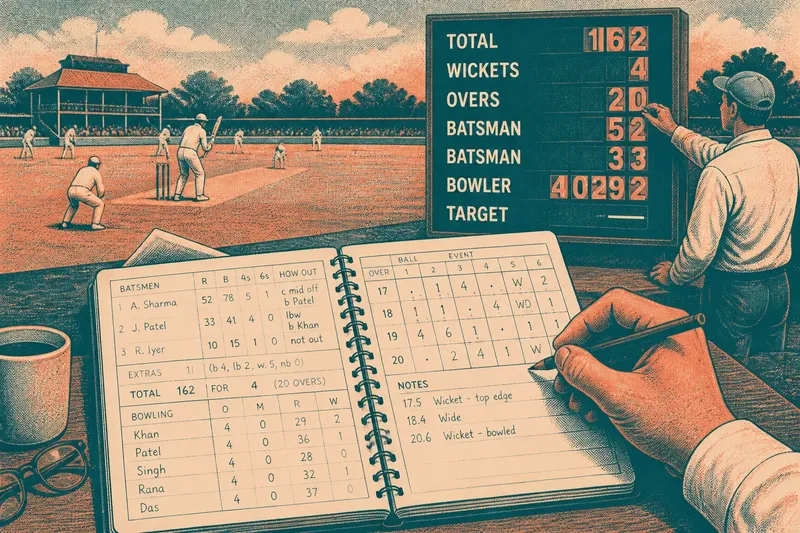
Cricket scorekeeping history is not a straight march from paper to screen: the scorebook and scoreboard developed as different ways to manage the same problem, preserving a match’s events while making its changing state visible. The book keeps the working detail; the board gives spectators a shared view.
The surviving story is clearest in that division of labor. Scoring methods and boards varied across grounds, and a broad sequence should not be mistaken for a single invention date. What changed over time was how the record was written, updated and displayed.
Keeping the innings
A scorebook does more than add runs. Its columns and symbols preserve the sequence behind the total: deliveries, batter contributions, extras and dismissals. A reader can follow how an innings developed rather than seeing only its latest sum.
That distinction matters because identical totals can describe very different passages of play. One might come from a steady partnership; another from quick boundaries followed by wickets. The total is the sum, while the book keeps the parts attached.
Traditional paper scoring relies on compact notation and running additions. The scorer has to record an event while play continues, and the marks need to be clear enough for another person to check. The book is like a cook’s notepad beside a menu: one holds the working details, the other presents a concise version to an audience.
Boards before electronics
Before electronic displays became familiar, grounds used manually updated boards. Depending on the venue, figures could be written on a surface or changed by moving visible panels. These methods made the score public, but updating still required people to transfer the latest information from the scoring record.
There was no single board design for every ground. Space, viewing distance and local practice shaped what a board could show. At its simplest, it could make the main state of the innings visible; the scorebook remained the fuller record behind those figures.
Electronic scoreboards changed how information was entered and presented, not the underlying task. A display could be updated without changing physical panels and could include more selected details. Screens later made room for player information and match context, while the scorer still had to identify what happened and record it correctly.
That is the useful historical anchor: the shift was from manually altered public figures to electronically managed displays, not from a complete paper record to an unnecessary one. The scoreboard became more flexible, but it continued to depend on a sound account of play.
Two kinds of record
A scoreboard selects. It commonly gives prominence to the team total, wickets and overs, with batter and bowler figures or chase information added as the display allows. Its purpose is quick reading from a distance, not a full account of every delivery.
The scorebook answers slower questions: which batter faced, how extras contributed, and what sequence led to a wicket or change in momentum. A display answers the immediate question, “Where does the match stand?” The two views work best together.
Imagine a local ground where a scorer records each delivery in a paper book and a volunteer enters the latest figures on an electronic board. A boundary changes the total; the volunteer updates the display, and spectators can see the new score. If the board shows a figure that conflicts with the book, the scorer checks the recorded sequence before the volunteer corrects the display. The result is a public score that can be checked against a more detailed record.
Scores and spectators
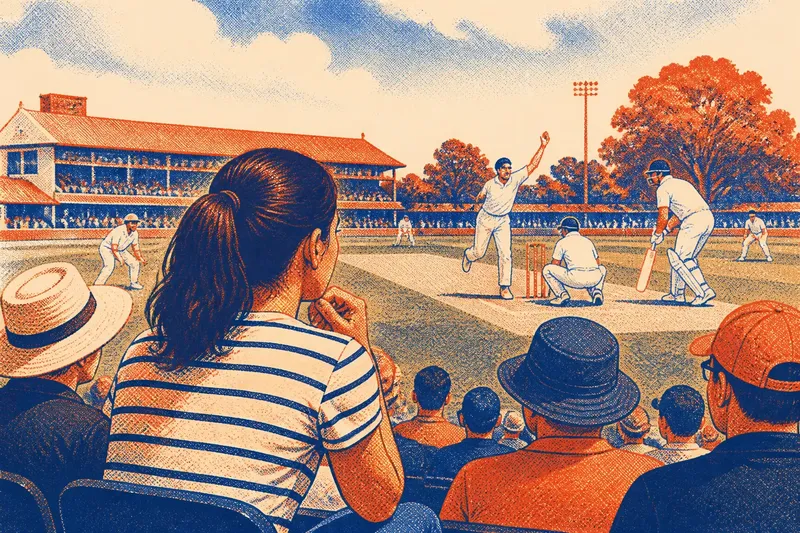
A board shapes the rhythm of watching. After a boundary or wicket, spectators look up to see the changed total, the wickets and sometimes the names of the batters. The figures make a moment legible across the ground, even for someone who missed the delivery itself.
In a chase, a displayed target gives the current score a clear context. During a longer innings, the partnership or an individual score may draw more attention. The numbers do not explain every choice: they leave out shot placement, field changes and the character of a bowling spell. Watching the field as well as the board connects the public figures to the play that produced them.
Questions about scoring?
What does a scorebook preserve?
A scorebook can retain delivery-level detail, dismissals, extras and the sequence of an innings. A scoreboard usually gives priority to the latest total and a selection of figures that spectators can read quickly.
Why do grounds show different details?
Boards differ in size, design and purpose, and the match situation affects which details are useful. A compact display may show essentials, while a larger screen can include batter and bowler figures or chase information.
Can I keep my own score?
Yes. A notebook or printed scorecard can help you follow the total and wickets, then add delivery details as you become familiar with the notation.
What should I check if a figure seems wrong?
Compare the official display with the published scorecard and identify whether the disagreement concerns the total, wickets, overs or an individual figure. Different views can update at different moments, so check the specific item before deciding what is unclear.
Reading the display
Start with the total, wickets and overs, then connect a change to the passage of play that caused it. If a batter’s score is displayed, consider it alongside the team total rather than in isolation.
When a screen feels crowded, choose one question to follow: is a partnership growing, or how does the target compare with the current score? That small focus makes the display easier to read without requiring attention to every number.
Cricket scorekeeping history is best understood as the coexistence of a detailed working record and a public display. When you look up at the board, the most useful next move is to look back at the field and notice which event the figures have just made visible.